
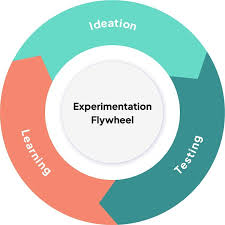
Throughout the season, we iterated on our robot. But just saying that phrase to the judges won’t impress them. You need data that you have collected with your team to prove that you understood the flaws of your robot by testing it, and then used that knowledge to improve your design.
What does “Testing” even mean?
Testing your robot doesn’t just mean eyeballing if the robot moves “kinda straight” or giving a vague statistic like “The mission worked 80% of the time.” Testing your robot design and game plan requires a repeatable process for collecting data and a method for organizing and presenting it.
Our Process
In the beginning, we used a simple table drawn on a whiteboard tracking our mission success rates, but we utilized Google Sheets. This way, all of our team members can access and edit our data on our shared Google Drive. It also allows us to format our data properly instead of just using markup on a few photos.
First off, we create a well-organized table in Google Sheets so we can keep track of exactly what we’re testing and what the results were. We simultaneously write on our whiteboard so that we can keep track of the changes we made in each iteration. We collect lots of data over 10 trials at a minimum, so we can make sure our robot is consistent, or if deviations are returning.
We make sure to use rulers or our robot’s internal gyroscope/measurements on the wheel to make sure human error stays out of our data. Finally, we analyze the data we’ve collected and identify the root cause of any problems we encountered. This allows us to improve our robot without overcomplicating any of our mechanisms.
In the end…
In the end, the judges aren’t just looking for the robot with the highest score—they are looking for the team with the most reliable engineering process. By moving our data from the whiteboard to Google Sheets and committing to rigorous 10-trial testing, we stopped guessing and started knowing. When you walk into that judging room with a binder full of spreadsheets and iteration logs, you aren’t just saying you improved your robot; you’re proving it.